

How to Set Yourself Up for a Better 2026 and Avoid the Resolution Trap
It’s January 1st, 2026. The champagne headache is fading, the festivities are now memories, and here we are face to face with that annual tradition of promises to our future selves. Whether you’re 26 or 80, whether this is your fifth attempt at the same resolution or your thirtieth, today feels different. It has to be.
So, how is this year different? Because you’re reading this with something you previously didn’t have: accumulated wisdom about what hasn’t worked, plus access to decades of behavioral science that finally explains why 94% of resolutions fail by February, and more importantly, what the successful 6% do differently.
The statistics are sobering but illuminating. About 31% of American adults make resolutions, with younger adults (58% of those under 30) more likely to do them. The goals remain consistent across age groups: save money (26%), improve health (22%), exercise more (22%), and achieve that elusive “be happier” (22%).
The trajectory is predictable: 77% are still on track after one week, 55% after one month, 43% after three months. By six months, more than half have abandoned ship. Yet people who make resolutions are still 11 times more likely to achieve their goals than those who don’t. The issue isn’t resolution-making itself—it’s the approach.
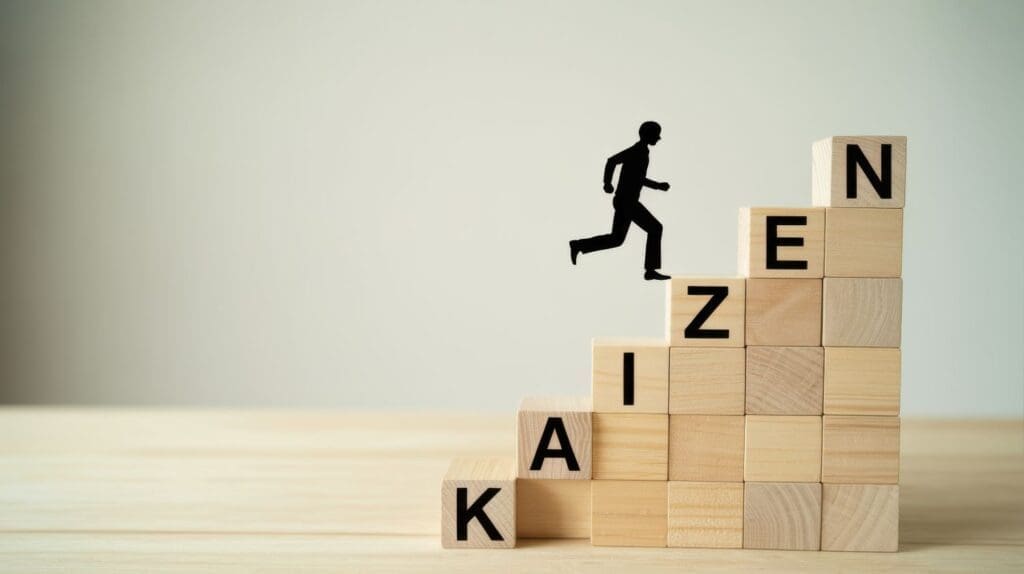
The Kaizen Revolution: Your Brain’s Secret Weapon
Every January for years, you’ve probably attempted dramatic, sweeping changes that trigger your brain’s ancient fight-or-flight response. Your neural pathways interpret these massive changes as threats and shut them down faster than you can say “new year, new me.”
Enter kaizen, which some of you may know as a Japanese manufacturing concept meaning “continuous improvement.” It’s the art of making changes so small your brain’s resistance doesn’t even activate. Think of it as sneaking past your own psychological security system.
Here’s how it works: A writer who’d failed at “write daily” goals for years tried something different. Instead of committing to 1,000 words, they simply opened their laptops and typed a single sentence. Just one. After a few weeks, that sentence naturally expanded into paragraphs, but the resistance was never triggered because the initial ask was minimal.
The math is compelling: improving just 1% daily compounds to nearly 38 times improvement over a year. This isn’t just smart—it’s the only sustainable path forward, whether you’re juggling career-building and student loans at 28 or managing teenagers and aging parents at 55.
The Framework: What Successful Resolution-Keepers Actually Do
Scientists studying successful resolution-keepers have identified specific patterns. Here’s your evidence-based roadmap, with practical steps built in:
1. Choose One Specific Thing
Your brain needs 30 days to build a new neural pathway. “Get healthier” fails. “Walk for 10 minutes after lunch” succeeds. Your brain can’t execute vague commands, but it thrives on clear instructions.
Week 1 Action:
Pick ONE behavior. Make it embarrassingly small.
- Physical health: One pushup after morning coffee
- Financial: Transfer $1 to savings daily
- Mental health: Write one thing you’re grateful for
- Learning: Five minutes on a language app
2. Build the Habit Loop
Every habit consists of three parts: cue, routine, and reward. Put workout clothes on your nightstand (cue), do your one pushup (routine), and enjoy your coffee (reward). The reward isn’t optional; it’s neurologically necessary.
Week 2 Action:
Add your trigger and reward. Increase by only 20-30% (one pushup becomes two, $1 becomes $2).
3. Connect to Your Why
“I should exercise” fails. “I want to play with my grandkids” succeeds. Purpose provides fuel when motivation wanes.
Week 3 Action:
Write your why. Post it where you’ll see it. Add one small environmental change that supports your goal (move books to the coffee table, hide the cookies, set up automatic transfers).
4. Create Strategic Accountability
Announcing goals on social media often backfires! Why, because your brain gets the same dopamine hit it would from actually achieving the goal. Instead, tell one person whose opinion genuinely matters.
Week 4 Action: Share your progress with your accountability partner. Celebrate the small win of completing a month.

The Compound Effect Across Life
The compound effect works regardless of age but manifests differently:
In your 20s-30s: That $50 monthly investment becomes a house down payment. Ten minutes of daily exercise prevents chronic conditions decades later.
In your 40s-50s: You have wisdom to know what matters and resources to support change. That daily walk might mean staying medication-free. That meditation practice might transform your relationships.
Past 60: Small changes are transformative. Language app practice maintains neuroplasticity. Strength exercises mean independence for decades longer.
Your 60-Day Roadmap
Days 1-14: Discovery Phase Observe without acting. When do you have ten free minutes? What existing habits could you piggyback on? This isn’t procrastination—it’s strategic intelligence gathering.
Days 15-30: Pilot Program Implement your one embarrassingly small change. Track with simple check marks on a calendar. No complex apps needed.
Month 2: Systematic Expansion Resist dramatic increases. Expand by just 20-30%. The goal is sustainable momentum, not impressive leaps.
Month 3 and Beyond: Identity Integration After 90 days, something shifts. You stop “trying to exercise” and become “someone who exercises.” This identity shift separates the successful from everyone else.
Why Traditional Approaches Fail (And How to Fix Them)
Environmental Pull: Your surroundings vote against your resolutions 24/7. Fix: Redesign your environment. Books on the coffee table, phone in another room.
Measurement Vagueness: “Being happier” is immeasurable. Fix: Track “three good laughs daily” instead.
All-or-Nothing Thinking: Missing one day feels like total failure. Fix: Build in “recovery protocols” and plan what you’ll do after you slip.
The Uncomfortable Truth
Change is uncomfortable, and it stays uncomfortable longer than motivational speakers admit. The difference between those who succeed and those who don’t? The successful expect it to be hard and do it anyway.
But here’s the flip side: once you push through the discomfort phase (typically 60-90 days), what was hard becomes automatic. Your brain literally rewires itself. What requires willpower becomes as natural as brushing your teeth.

Why 2026 Really Can Be Different
Today, you have something you didn’t have before: the intersection of knowledge and urgency. You know what doesn’t work because you’ve tried it. You have access to behavioral science that previous generations didn’t. And you understand that consistent small steps beat dramatic gestures every time.
The successful 6% aren’t special. They don’t have more willpower or better genes. They approach change differently. They work with their psychology instead of against it. They design their environment to support success. They track progress and celebrate small wins.
Most importantly, they understand that resolutions aren’t about becoming a different person. They’re about becoming a slightly better version of who you already are, one tiny step at a time.
Start now. Start small. But start.
Here’s to your best year yet.