
Ginny Estupinian PhD, ABPP

Neurofeedback Therapy: Integrated Brain Training with Dr. Ginny Estupinian, PhD, ABPP

About This Service

Neurofeedback is a non-invasive, drug-free method that trains the brain to regulate its own electrical activity using real-time feedback from EEG sensors. At our practice, neurofeedback is not offered as a standalone service. It is integrated with evidence-based psychotherapy, including Cognitive Behavioral Therapy (CBT), and delivered by Dr. Ginny Estupinian, PhD, ABPP, a board-certified clinical psychologist. After an initial EEG brain map, equipment is shipped to your home so you can complete short training sessions on your own schedule while Dr. Estupinian guides your treatment through telehealth.

At a glance

What it is
EEG-based brain training combined with clinical therapy
Delivered by
Dr. Ginny Estupinian, PhD, ABPP, a board-certified clinical psychologist
Format
At-home equipment with remote and in-person clinician care
Initial assessment
40-minute EEG brain map
Training schedule
2 to 3 sessions per week, approximately 15 minutes each, completed at home
Typical timeline to noticeable improvement
3 to 6 weeks, depending on consistency and individual response
Conditions addressed
ADHD, anxiety, insomnia, migraines, chronic pain, PTSD, and others
Eligibility
Clients located in California, Oregon, Illinois, or Florida (via telehealth)
Payment
Private-pay; superbills provided for out-of-network reimbursement

Neurofeedback Therapy with Dr. Ginny Estupinian, PhD, ABPP

Neurofeedback is a non-invasive, drug-free way to train your brain to function more balanced and efficiently. Using small sensors that read your brainwave activity in real time, neurofeedback teaches your brain to settle into healthier patterns. The goal is sharper focus, calmer responses to stress, better sleep, and steadier mood. Decades of research support its use for conditions including ADHD, anxiety, insomnia, migraines, chronic pain, and post-traumatic stress.

At our practice, neurofeedback isn’t offered as a standalone service. Dr. Ginny Estupinian, PhD, ABPP, is a board-certified clinical psychologist who combines neurofeedback with evidence-based psychotherapy, including Cognitive Behavioral Therapy. The result is a treatment that combines brain-level training and clinical care. After an initial EEG brain map, the equipment is shipped to your home. You complete short training sessions on your own schedule while Dr. Estupinian guides your treatment through telehealth.

What Makes This Approach Different

Neurofeedback is a powerful technique, but it’s not regulated. That means anyone can purchase equipment and call themselves a neurofeedback provider, regardless of clinical training. The quality of care varies enormously across the field, and so do the outcomes.

Dr. Estupinian’s practice is built around three commitments that distinguish her work from standalone neurofeedback services and consumer brain-training apps.

A Board-Certified Clinical Psychologist Guides Every Step

Dr. Ginny Estupinian holds a doctorate in clinical psychology (PhD) and is board-certified by the American Board of Professional Psychology (ABPP). This is a credential held by fewer than five percent of licensed psychologists. She personally designs every training protocol, reviews your brainwave data, and adjusts your plan as you progress.

Neurofeedback Is Integrated with Evidence-Based Therapy

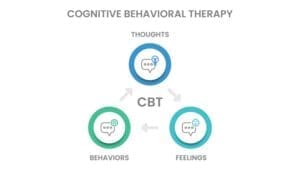
An illustration of cognitive behavioral therapy and the three aspects that are used in helping people overcome depression as outlined by Ginny Estupinian PhDStandalone neurofeedback addresses the brain. Standalone therapy addresses the mind. Dr. Estupinian’s approach combines both. Neurofeedback is paired with evidence-based psychotherapy, including Cognitive Behavioral Therapy (CBT), so the changes you train at the neurological level are reinforced by the clinical strategies you build in session. This is an integrated model that Dr. Estupinian uses, in which technology serves as a tool within a complete treatment plan, not a substitute for clinical care.

The Training Happens at Home, on Your Schedule

Many neurofeedback practices require you to come into the office for every session. Dr. Estupinian uses current-generation neurofeedback technology that allows the equipment to be shipped to your home after your initial EEG brain map. You complete short training sessions, about 15 minutes long, 2 to 3 times per week. A companion phone app lets you visualize your progress, and Dr. Estupinian reviews your data remotely from her clinical dashboard between scheduled in-person or telehealth check-ins.

How Neurofeedback Therapy Works

Your treatment moves through five clear stages, designed to give your brain the data it needs to learn and to give Dr. Estupinian the data she needs to guide your progress.

Step 1: Initial Consultation and Clinical Assessment

Treatment begins with a thorough clinical assessment with Dr. Estupinian. She’ll review your symptoms, history, goals, and any prior treatments, including medications and previous therapy, to determine whether neurofeedback is a good fit and how it should be integrated with psychotherapy in your case. This step ensures your treatment plan is grounded in your full clinical picture, not just your brainwave data.

Step 2: Your EEG Brain Map (Baseline Measurement)
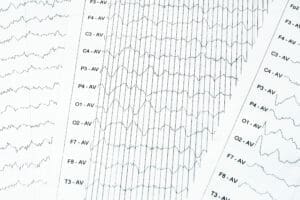
Photo of EEG electrophysiological monitoring of brain wave patterns.Next, your neurofeedback equipment is shipped directly to your home. When it arrives, a member of Dr. Estupinian’s team walks you through setup and use, either in person or via a live video session, so you’re comfortable with the device before you begin. You’ll then complete a 40-minute EEG brain map. The process is simple and painless: sensors rest gently against your scalp and record your brainwave activity without transmitting any current into your brain. The brain map produces a detailed picture of your unique neural patterns, showing which networks are well-regulated and which are out of balance. Dr. Estupinian uses this data to understand how your brain is shaping your attention, memory, stress response, and cognitive control.

Step 3: Your Personalized Training Protocol

Dr. Estupinian reviews your brain map alongside your clinical history and builds a custom training protocol tailored to your specific patterns and goals. From her clinical dashboard, she configures exactly which brainwave patterns to train, in what sequence, and at what intensity. This protocol is yours alone, built around the imbalances unique to your brain rather than a generic template.

Step 4: At-Home Training, Supported by Dr. Estupinian’s Team

You take the equipment home and begin training on your own schedule. Sessions run about 15 minutes, 2 to 3 times per week, and you complete them through games, videos, or streaming content that your own brain activity guides in real time. When your brain produces healthier patterns, the experience rewards you with positive feedback, clearer images, continued playback, and smoother gameplay. Over time, your brain learns to make those patterns its default.

Trained staff supports your day-to-day training under Dr. Estupinian’s supervision, so you have help available whenever you need it. A companion phone app lets you track your progress and visualize how your brain regulation shifts over time: less hyperarousal, sharper focus, better sleep, more emotional control.

Step 5: Telehealth Check-Ins and Integrated Therapy

Throughout your treatment, you’ll meet with Dr. Estupinian for scheduled check-ins, which can be in person at our Los Gatos office or via telehealth, depending on your location. During these sessions, she reviews your training data, refines your protocol as your brain progresses, and integrates the neurofeedback work with evidence-based therapy approaches such as Cognitive Behavioral Therapy. This is the step that distinguishes integrated neurofeedback therapy from standalone brain training: the changes you train at the neurological level are reinforced by the clinical strategies you build in session.

Most clients begin noticing improvements within 3 to 6 weeks of consistent training, though timing varies from person to person. Consistency is the single most important factor.

Conditions Neurofeedback May Help Address

Decades of peer-reviewed research support the use of neurofeedback for a range of conditions involving dysregulated brainwave activity. Below is a summary of the conditions most commonly addressed in Dr. Estupinian’s integrated treatment plans, along with the research supporting each.

Whether neurofeedback is appropriate for any individual depends on a careful clinical assessment. Not every condition responds equally, and not every person is a good candidate.

ADHD (Attention-Deficit/Hyperactivity Disorder)

A graphic illustration of a student having trouble focusing while studying due to ADHD. Neurofeedback can help increase focus for people with ADHDNeurofeedback has one of the strongest evidence bases for ADHD of any non-pharmaceutical intervention. A 2012 review in Neurotherapeutics by Moriyama and colleagues concluded that neurofeedback meets criteria as an evidence-based treatment for ADHD, with effects on attention and impulsivity sustained at follow-up.

Dr. Estupinian conducts comprehensive adult ADHD assessments to determine whether ADHD is contributing to your symptoms. If a diagnosis is confirmed and you’re a good candidate, neurofeedback can be integrated with Cognitive Behavioral Therapy to support both the neurological patterns underlying attention and the behavioral strategies that translate improvement into daily life.

Anxiety Disorders and Panic Attacks

Generalized anxiety and panic involve persistent over-activation in brainwave patterns associated with hyperarousal. A meta-analysis by Nestoriuc and colleagues, published in Applied Psychophysiology and Biofeedback (2008), found significant reductions in anxiety symptoms following biofeedback-based protocols.

Dr. Estupinian assesses anxiety disorders and panic during your initial consultation and develops a treatment plan tailored to your situation. When appropriate, neurofeedback is integrated with evidence-based anxiety treatment to address both the neurological and the cognitive contributors to anxiety.

Post-Traumatic Stress Disorder (PTSD) and Trauma

A 2016 randomized controlled study led by Bessel van der Kolk and colleagues, published in PLOS ONE, found that neurofeedback significantly reduced PTSD symptoms compared to a waitlist control. The study was recognized with the 2017 Award for Outstanding Contribution to Science from the Foundation for Neurofeedback and Applied Neuroscience. Related research by Nicholson and colleagues (2016) demonstrated that alpha-wave neurofeedback modulates connectivity in the amygdala, a brain region central to threat response.

Dr. Estupinian assesses PTSD and trauma-related dysregulation during your initial consultation. When appropriate, neurofeedback is integrated with trauma-informed therapy to address the deep-system patterns that often underlie post-traumatic symptoms.

Depression

Young and colleagues (2014) used real-time fMRI neurofeedback to train amygdala regulation in patients with major depressive disorder, with measurable reductions in depressive symptoms.

Dr. Estupinian assesses depression during your initial consultation. While neurofeedback is not a replacement for established depression treatment, it can serve as a supportive intervention when integrated with psychotherapy and, when applicable, alongside medication management coordinated with your prescribing physician.

Insomnia and Sleep Difficulties

young woman laying awake and streesed about sleepSleep is regulated by specific brainwave transitions, and disruption of those transitions is a common feature of chronic insomnia. Neurofeedback aims to retrain the brain’s ability to shift smoothly between alert, relaxed, and sleep-onset states.

Dr. Estupinian treats insomnia and sleep difficulties primarily through behavioral sleep medicine, an evidence-based approach that addresses the behavioral, cognitive, and environmental factors disrupting sleep. When appropriate, neurofeedback is added to the treatment plan to support the brainwave regulation that underlies healthy sleep transitions.

Migraine and Tension Headaches

Image of a woman experiencing a migraine. Neurofeedback is one of the possible treatments.Stokes and Lappin’s clinical outcome study of 37 patients with migraine (Behavioral and Brain Functions, 2010) reported significant reductions in headache frequency and severity following neurofeedback training. Migraines and tension headaches frequently involve dysregulated brainwave activity that medication alone may not fully address.

Patients with migraines and tension headaches typically come to Dr. Estupinian after a diagnosis from a neurologist or primary care physician, or following a referral from their treating doctor. Dr. Estupinian then determines whether neurofeedback is a good fit for your situation and integrates it with appropriate therapy as a complement to your medical care.

Chronic Pain

Photo of an older man experiencing back pain, potentially linked to depressionJensen and colleagues (2008), publishing in the Journal of Neurotherapy, found that neurofeedback produced clinically meaningful reductions in pain associated with Complex Regional Pain Syndrome Type I. Chronic pain involves both peripheral signaling and central nervous system processing. Neurofeedback targets the central component that pain medication and physical interventions don’t always reach.

Patients with chronic pain typically come to Dr. Estupinian after a diagnosis from a pain specialist or primary care physician, or following a referral from their treating doctor. Dr. Estupinian assesses the psychological and neurological components contributing to your pain experience and, when appropriate, integrates neurofeedback with therapy as a complement to your medical care.

Other Conditions Where Research Is Emerging

Neurofeedback has also been studied in personality disorders (Surmeli and Ertem, 2009), autism spectrum disorder (Sokhadze et al., 2014), and post-stroke recovery, among others. During your initial consultation, Dr. Estupinian will discuss the current evidence base for your specific situation.

Is Neurofeedback Right for You?

Neurofeedback can produce meaningful results for many people, but it isn’t the right intervention for everyone. The honest answer to “is this for me” depends on your specific situation, your goals, and how willing you are to engage with the process. Below is a clear picture of who tends to benefit, who tends not to, and what the consultation will help determine.

You May Be a Good Candidate If:

You have persistent symptoms, difficulty focusing, anxiety, sleep problems, migraines, chronic pain, or trauma-related dysregulation that haven’t fully responded to medication, talk therapy, or both. You’re open to a treatment model that combines neurofeedback with evidence-based psychotherapy rather than seeking brain training as a standalone intervention. You can commit to consistent training: 2 to 3 sessions per week for at least several months, completed at home on your own schedule. You’re located in California, Oregon, Illinois, or Florida (the states where Dr. Estupinian is licensed to practice). And you’re comfortable with a treatment approach that produces gradual, measurable change over weeks rather than instant results.

Neurofeedback May Not Be the Right Fit If:

You’re looking for a quick fix or a short-term intervention. Neurofeedback works through gradual neural learning, not rapid symptom relief, and clients who can’t sustain consistent training rarely see meaningful results. You want neurofeedback without therapy. Dr. Estupinian’s model integrates the two, and standalone neurofeedback is available from other providers if that’s what you’re seeking. You’re in acute crisis. If you’re currently experiencing severe symptoms, such as active suicidality, untreated psychosis, or severe substance dependence, your clinical needs may require stabilization before neurofeedback can be a useful part of your care. You’re located outside the states where Dr. Estupinian is licensed. Because neurofeedback is delivered as part of clinical psychotherapy in her practice, she can only work with clients in California, Oregon, Illinois, or Florida (via telehealth).

What the Consultation Will Help Determine

The initial consultation isn’t a formality; it’s a genuine assessment of whether neurofeedback is the right tool for what you’re working on. Dr. Estupinian will review your symptoms, history, prior treatments, and goals. She’ll discuss what neurofeedback can realistically accomplish for you, what the integrated therapy component would look like, and what alternatives might be worth considering if neurofeedback isn’t the best fit. Some prospective clients leave the consultation with a different recommendation than the one they expected, and that’s a feature of the process, not a bug.

Begin Your Neurofeedback Therapy Consultation

Close-up image of the front door logo of Ginny Estupinian, PhD, Los Gatos Psychologist, featuring the official logo prominently displayed on the glass. Through the door, the welcoming lobby is visible, showcasing warm lighting, comfortable seating, and tasteful decor, creating an inviting atmosphereIf you’ve read this far, you’re likely considering whether integrated neurofeedback therapy could help with something you’ve been working on for a while. The next step is a consultation with Dr. Estupinian.

During the evaluation consultation, Dr. Estupinian will review your symptoms, history, and goals, discuss what neurofeedback could realistically accomplish in your case, and help you decide whether the integrated treatment model is the right fit.

There’s no pressure to commit to the treatment during this session. The evaluation session is intended to determine whether neurofeedback is appropriate for you and to help you make an informed decision. Your only cost will be the 50-minute session with Dr. Estupinian at $300.

Dr. Estupinian works with clients located in California, Oregon, Illinois, and Florida (the last via telehealth). Equipment is shipped to clients who can’t visit the Los Gatos office in person.

How to Schedule

Book online: Schedule a consultation

Call the office: 844-802-6512

General inquiries: Contact us

Our office hours are Monday through Friday, 10:00 AM to 7:00 PM Pacific, and Saturday, 10:00 AM to 2:00 PM. We respond to online inquiries within one business day.

Contact Us

We are here to answer your questions and guide you toward the best solution for your concerns.  Call today or book online for an appointment.

Frequently Asked Questions

Neurofeedback is a non-invasive, drug-free method that helps your brain learn to regulate its own electrical activity. Also known as EEG biofeedback, it uses real-time displays of brainwave patterns to guide your brain toward more balanced, efficient performance. In Dr. Estupinian’s practice, neurofeedback is not offered as a standalone service  it is integrated with evidence-based psychotherapy, including Cognitive Behavioral Therapy (CBT), so that brain-level training and clinical care work together.

In Dr. Estupinian’s practice, neurofeedback and therapy are combined rather than offered separately. Just as Virtual Reality Therapy is used as a tool within a broader treatment plan, neurofeedback is integrated with clinical therapy approaches such as Cognitive Behavioral Therapy. This combination means you receive both the neurological benefits of brain training and the clinical expertise of a board-certified psychologist guiding your overall treatment.

Neurofeedback works through neuroplasticity:  your brain’s lifelong ability to form new neural pathways. As you engage with games, videos, or streaming content, sensors record your brainwave activity and your brain itself guides the experience. The system rewards healthier patterns with positive feedback in real time, and over repeated sessions your brain learns to make those patterns its default. Dr. Estupinian focuses on pinpointing what needs to be trained while integrating the work into your broader therapy plan.

Yes. Neurofeedback is non-invasive and recognized by the Food and Drug Administration as a safe procedure. The sensors only record your brain’s electrical activity they don’t transmit any current into your brain. Side effects are uncommon and typically mild, such as temporary fatigue after early sessions while your brain adjusts.

The EEG brain map is a 40-minute baseline scan that records your unique brainwave patterns. The results give Dr. Estupinian deep insight into which neural patterns are out of balance and how that shapes your attention, memory, stress response, and cognitive control. She uses the brain map to build a custom training plan and to personalize every stage of your treatment.

Each neurofeedback training session takes about 15 minutes and is completed 2 to 3 times per week from your home. Your initial EEG brain map, the baseline measurement Dr. Estupinian uses to design your protocol,  takes approximately 40 minutes and is simple and painless. Periodic check-ins with Dr. Estupinian are conducted in person at our Los Gatos office or via telehealth, depending on your location and treatment plan.

Scientific research has demonstrated neurofeedback’s effectiveness for ADHD, anxiety disorders, panic attacks, migraine and tension headaches, insomnia, chronic pain, post-stroke syndrome, and post-traumatic stress disorder. Neurofeedback is not a first-line treatment for every condition.  Dr. Estupinian determines candidacy through a thorough consultation and EEG brain map tailored to your specific situation.

The FDA recognizes neurofeedback, also called EEG biofeedback, as a safe procedure, and specific neurofeedback devices have received FDA clearance for uses such as relaxation training. Neurofeedback is best understood as a training method that supports your brain’s natural ability to self-regulate rather than a cure for any single condition.

Dr. Estupinian’s practice is private-pay and does not bill insurance directly. Clients receive a detailed superbill they can submit for possible out-of-network reimbursement. Coverage for neurofeedback varies significantly by insurance plan and diagnosis, so we recommend contacting your insurer directly before beginning treatment to clarify your benefits.

No, neurofeedback is completely painless. You’ll wear a soft cap or headset with small sensors that rest gently against your scalp  nothing penetrates the skin, and no electricity enters your brain. Most clients find sessions relaxing and even enjoyable, watching videos, streaming content, or playing feedback-driven games as their brain activity guides the experience.

Neurofeedback as a technique is not currently regulated, which means many providers offer it without clinical training or licensure. Dr. Estupinian is a board-certified clinical psychologist (PhD, ABPP) who provides neurofeedback as part of an integrated treatment plan that includes evidence-based therapy. Because she combines neurofeedback with psychotherapy, she only works with clients located in states where she is licensed to practice.

Yes. Dr. Estupinian uses current-generation neurofeedback technology that allows clients to complete training from the comfort of their own space. After your initial consultation, the equipment is shipped to your home, and a member of Dr. Estupinian’s team walks you through setup either in person or via a live video session. You then train 2 to 3 times per week for about 15 minutes per session while Dr. Estupinian monitors your progress remotely from her clinical dashboard.

Because Dr. Estupinian combines neurofeedback with clinical therapy, she works only with clients located in states where she is licensed to practice psychology: California, Oregon, and Illinois, plus Florida via telehealth. The neurofeedback equipment is shipped directly to your home, you complete your EEG brain map and training sessions there, and Dr. Estupinian guides your treatment through scheduled telehealth sessions.

For clients located in California, Oregon, Illinois, or Florida via telehealth, the neurofeedback equipment is shipped to your home. When it arrives, a member of Dr. Estupinian’s team walks you through setup and use over a live video session so you’re confident with the device before you begin. Dr. Estupinian then analyzes your 40-minute EEG brain map, builds a custom training protocol, and integrates neurofeedback with evidence-based therapy approaches such as CBT during your telehealth sessions. You complete brain-training sessions at home usually 2 to 3 times per week, 15 minutes each.  Dr. Estupinian will monitor your data and refines your plan as needed.

Most clients begin noticing improvements within 3 to 6 weeks of consistent training, though timing varies from person to person. Training is personalized to your goals and brain activity, and Dr. Estupinian adjusts your protocol based on the data she reviews from her clinical dashboard. Consistency is the key factor in how quickly results appear.

You’ll track your progress directly from your phone. The app lets you visualize how your brain regulation shifts over time — less hyperarousal, sharper focus, better sleep, more emotional control. Dr. Estupinian reviews the same data from her clinical dashboard and meets with you in person or via telehealth to refine your protocol as you progress.

Biofeedback measures and trains a wide range of bodily signals such as, heart rate, breathing, muscle tension, skin temperature. Neurofeedback is a specialized type of biofeedback that focuses exclusively on brainwave activity measured by EEG. Both teach self-regulation through real-time feedback, but neurofeedback works directly with your central nervous system.

Good candidates typically have persistent symptoms such as, focus difficulties, anxiety, sleep problems, migraines, or trauma-related dysregulation  that have not fully responded to medication or talk therapy alone. Because Dr. Estupinian combines neurofeedback with clinical therapy, candidates must be located in a state where she is licensed (California, Oregon, Illinois, or Florida via telehealth). The initial EEG brain map determines whether your brainwave patterns show imbalances that neurofeedback is well-suited to address.

Call for specific costs.  Office visits are 50 minute sessions at $300 plus equipment costs. Neurofeedback with Dr. Estupinian includes an initial EEG brain map, at-home equipment shipped to remote clients or fitted in-office for local clients, and ongoing clinician oversight. We accept private payment only and provide superbills for out-of-network insurance submission. Contact our office for current pricing details.

Some of the research studies on the efficacy of neurofeedback

ANS Foundation Van der Kolk (91)     1/1/09-12/31/12    A pilot study examining the impact of neurofeedback on adults and adolescents with chronic post-trauma dysregulation.

Gapen, M., van der Kolk, B. A., Hamlin, E., Hirshberg, L., Suvak, M., & Spinazzola, J. (2016). A pilot study of neurofeedback for chronic PTSD. Applied psychophysiology and biofeedback41(3), 251-261.

Mark P. Jensen, Caroline Grierson, Veronika Tracy-Smith, Stacy C. Bacigalupi MA, Siegfried Othmer. (2008) Neurofeedback Treatment for Pain Associated with Complex Regional Pain Syndrome Type I, Pages 45-53 Journal of Neurotherapy Investigations in Neuromodulation, Neurofeedback, and Applied Neuroscience

Moriyama, T. S., Polanczyk, G., Caye, A., Banaschewski, T., Brandeis, D., & Rohde, L. A. (2012). Evidence-based information on the clinical use of neurofeedback for ADHD. Neurotherapeutics: The Journal of the American Society for Experimental NeuroTherapeutics, 9(3), 588–598.

Nestoriuc, Y., Martin, A., Rief, W. et al. Appl Psychophysiol Biofeedback (2008) 33: 125. https://doi.org/10.1007/s10484-008-9060-3

Nicholson, A. A., Ros, T., Frewen, P. A., Densmore, M., Théberge, J., Kluetsch, R. C., … Lanius, R. A., (2016). Alpha oscillation neurofeedback modulates amygdala complex connectivity and arousal in posttraumatic stress disorder. NeuroImage. Clinical, 12, 506–516.

Sokhadze, E. M., El-Baz, A. S., Tasman, A., Sears, L. L., Wang, Y., Lamina, E. V., & Casanova, M. F. (2014). Neuromodulation integrating rTMS and neurofeedback for the treatment of autism spectrum disorder: an exploratory study. Applied Psychophysiology and biofeedback, 39(3-4), 237–257.

Stokes, D. A, Lappin, M.S. Neurofeedback and biofeedback with 37 migraineurs: a clinical outcome study (2010) Behavioral and Brain Functions 6:9

Surmeli, T., & Ertem, A., (2009). QEEG Guided Neurofeedback Therapy in Personality Disorders: 13 Case Studies. Clinical EEG and Neuroscience, 40(1), 5–10. https://doi.org/10.1177/155005940904000107

Young, K. D., Zotev, V., Phillips, R., Misaki, M., Yuan, H., Drevets, W. C., & Bodurka, J. (2014). Real-time fMRI neurofeedback training of amygdala activity in patients with major depressive disorder. PloS one, 9(2), e88785

van der Kolk, B. A., Hodgdon, H., Gapen, M., Musicaro, R., Suvak, M. K., Hamlin, E., & Spinazzola, J. (2016). A Randomized Controlled Study of Neurofeedback for Chronic PTSD. PloS one11(12), e0166752. (2017 Award for outstanding contribution to science, Foundation for Neurofeedback & Applied Neuroscience)