

Navigating News Anxiety in Uncertain Times
As the year began, many of my clients said it felt impossible at times to look away from the news. From international conflicts to domestic policy shifts, from economic turbulence to social upheaval, the constant stream of troubling developments can leave even the most focused individuals struggling to concentrate.
Perhaps you agree that it feels like we are living in turbulent times, and there’s no reason to expect things to become less chaotic in the near future. During such moments, our emotions are strained and pushed to the limit, making it increasingly important that we recognize their effects on ourselves and others.
If you’re experiencing fear, sadness, confusion, or a general sense that the world has shifted beneath your feet, it’s important to recognize that these are normal human responses to abnormal circumstances, not signs of weakness or overreaction. In my practice, I’ve seen a significant increase since 2020 in clients reporting anxiety directly provoked by current events. Some describe obsessively scrolling social media; others talk about feeling helpless or paralyzed. The key is not to eliminate these feelings but to learn how to manage them effectively.
The challenge isn’t whether to stay informed because, as a leader in any sector, staying current on world developments is essential. The real question is how to remain knowledgeable without getting sucked into an anxiety-inducing vortex of social media feeds and competing news sources. The answer lies in developing emotional intelligence to navigate these turbulent times effectively and in implementing practical strategies to manage information consumption.
Understanding Your Brain’s Response to Negative News and Social Media
From an evolutionary perspective, our brains are wired to pay closer attention to negative news. From the beginning, this has always been a survival strategy that has protected us.
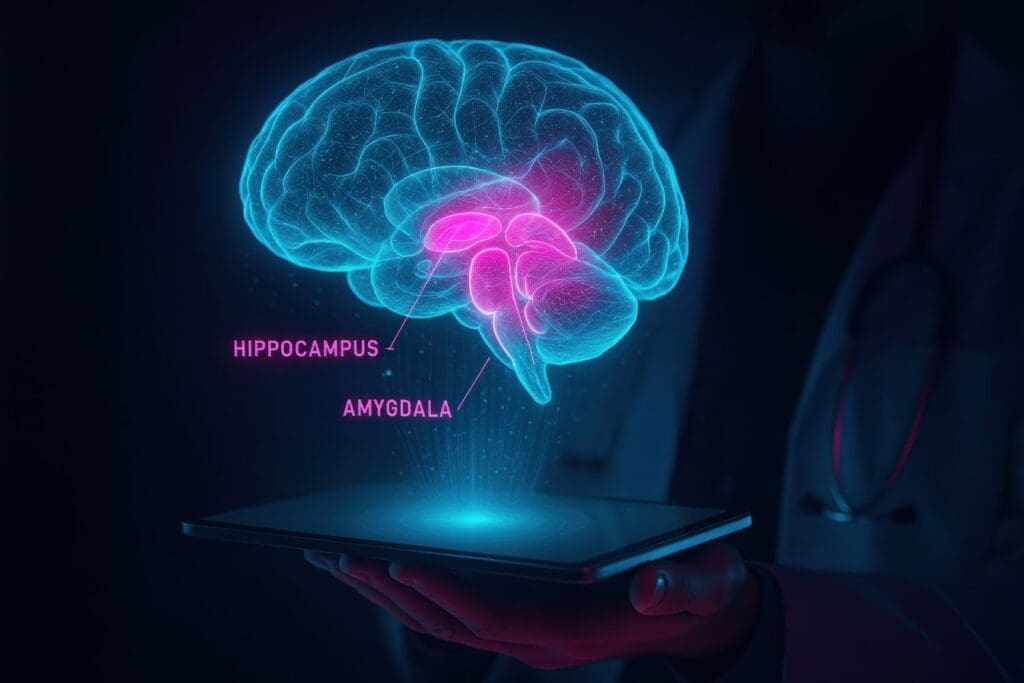
When we see, read, or hear something in the news that triggers a sense of danger, our bodies respond physiologically. A part of the brain responsible for this reaction is the amygdala, which initiates the danger response even when the “threat” is only information (news, images, words, sounds).
When the amygdala detects a threat, it triggers a cascade through your hypothalamus, sympathetic nervous system, and adrenal glands, flooding your body with adrenaline and cortisol. It sets off the familiar anxiety response: your heart races, breathing becomes shallow, muscles tense up, your gut churns, and you shift into high-alert vigilance mode. The physiological response makes it difficult to remain calm and focused. I pass the thinking brain. That’s why the body reacts before you can say: I’m safe, this is just the news.” As you can imagine, the problem intensifies with constant consumption.
Our bodies respond very differently to acute stress versus chronic stress. We are actually quite good at managing short bursts of stress. A r f dose of a big stressor gives your nervous system a chance to activate and then relax, restoring your internal sense of safety. But when we maintain a constant low level of news-induced stress throughout the day, we never get that chance to recover.
The “Reciprocal Distress Cycle”
This is compounded by what researchers call a reciprocal distress cycle. When a crisis or major news event occurs, people naturally turn to the media for information and a logical and rational response. But studies from UCLA have shown that the process feeds on itself: you learn about a troubling event, you feel distressed, and that distress drives you to consume even more coverage, which further intensifies the distress. For high-performing professionals who pride themselves on staying informed, this cycle can be especially difficult to break because the impulse to keep reading feels productive, even when it crosses into anxious rumination.
How Social Media Amplifies Workplace Anxiety
Recent research from Rutgers University, published in the Journal of Organizational Behavior, reveals that what we see on social media while at work can shape our mood, motivation, and even how we treat our coworkers. This study surveyed 133 workers twice daily for two weeks, asking them to describe the most memorable post they saw each day, then tracking how they felt and how productive they were at work.
The researchers identified four content categories and their workplace effects:
- Family posts (like kids’ first day at school) tend to boost confidence.
- Political posts or rage bait spike anxiety and cause people to withdraw socially.
- Achievement posts (job promotions) have mixed effects depending on personality. Cooperative people feel motivated, while non-competitive individuals feel demotivated.
- Attractive posts (thirst traps) also affect mood and engagement.
This chronic activation leaves us feeling distressed and hopeless. Of n, eople feel kind of paralyzed after looking at these posts because their nervous systems are activated, which prevents them from focusing and concentrating.
The statistics are sobering: In a survey by Ohio State University Wexner Medical Center, 45% of adults reported being stressed at least once a week because of social media, and 16% reported being stressed every day. Some researchers have even identified “meta-stress” as another layer to the anxiety cycle. Thi is described as stressing about the stress that social media generates.
Four Ways Emotional Intelligence Helps Navigate Turbulent Times
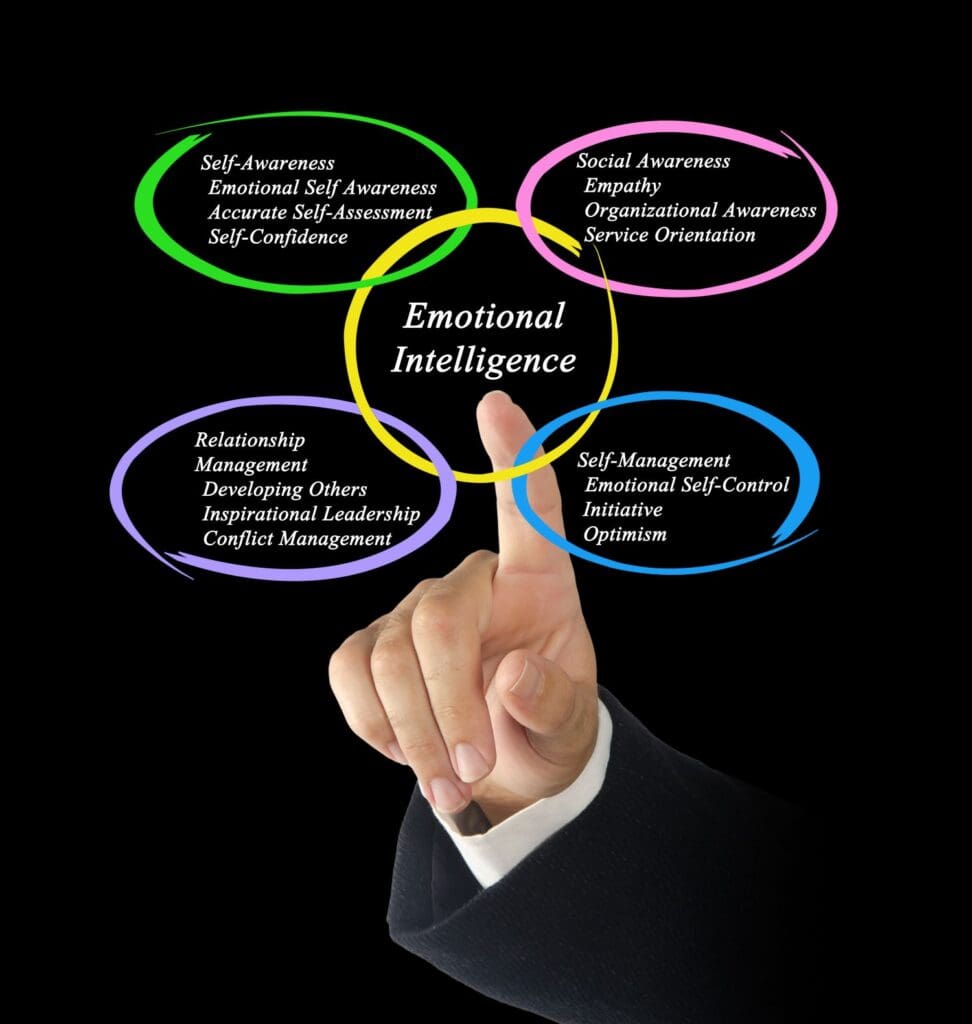
Becoming acutely aware of ourselves and others in this type of environment is paramount to building healthy relationships in all areas of our lives. Emotion and intelligence provide a framework not just for surviving turbulent times but also for maintaining our effectiveness and relationships despite external chaos.
1. Managing Your Triggers
During crisis situations, heightened emotional self-awareness allows us to recognize our triggers. Rather than reacting to our emotions, this allows us to pause, take time out, and respond after our emotions have settled and we’ve had time to think things through rationally.
This is particularly relevant when consuming news and social media. Begin by asking a crucial question: “Am I consuming news for entertainment, or am I consuming news to inform action?” If the news you’re taking in isn’t actionable, it’s likely just increasing your stress or serving as a distraction.
It’s easy to convince ourselves that reading the news is productive and keeps us informed, but often our emotions drive us to keep reading.
By recognizing this emotional pull, we can make more thoughtful choices rather than react impulsively.
2. Sustaining Relationships
Turbulent times can strain relationships as everyone feels increased pressure. If left unchecked, relationships that would normally remain positive could fracture, especially when people hold different views on current events or have varying levels of anxiety about the news.
The Rutgers study found that exposure to political or contentious content on social media causes people to withdraw socially at work when connection and collaboration matter most. To prevent relationship damage, we need to become more empathic and actively listen to others. Emotionally intelligent people have learned to use these tools to help overcome misunderstandings, build support networks, and develop a sense of collaboration and community, recognizing that colleagues, friends, and family members may be processing current events differently.
3. Building Coping Strategies
Emotionally intelligent people have developed coping strategies that help them thrive, even during times of unusually high stress. For example, they are aware of and continually practice asking for help, mindfulness, openness, and strategic vulnerability. Modeling these habits helps others they’re involved with build their own coping strategies.
These tools become especially important when managing news consumption and its effects, providing alternatives to doomscrolling and helping us regulate our nervous system when we become activated. For those whose jobs require regular social media engagement, such as PR representatives, marketers, and social media managers, these coping strategies become even more critical. Not surprisingly, a recent survey found that 77% of social media workers are burned out, highlighting the importance of sustainable practices.
4.Deescalating Conflict
Conflicts, which are constant in normal times, increase in both intensity and frequency during troubled times. This equips increased empathy and the ability to listen to and get to know others on a deeper, more personal level.
Emotional intelligence allows us to go beyond surface biases and stereotypes. Instead of jumping to judgment, it allows us to dig deeper to find out what the other person is going through. Instead of reacting, emotional intelligence allows us to ask relevant questions that help lower defenses and deepen our understanding of what motivates and drives others. Being able to form deeper connections allows us to gain a much better understanding, even when we don’t agree, which lays the foundation for a much healthier relationship.
Create Intentional Guardrails for Media Consumption
Let’s review some essential practical strategies for managing information consumption. Think of the information you consume as a diet, like your nutritional intake. Just as you need balanced nutrition, you need a balanced media diet.
Implement Time-Based Boundaries
Pick a specific time when you can pay full attention, not when the news is blaring in the background, or you’re staring blankly at a website. Decide how much time you have to devote to news consumption. You can probably extract significant value from just 15 minutes of concentrated reading.
Set a timer on your phone. When it goes off, finish the current story and move on. Without the external reminder, one story leads to another, and suddenly, much more time than intended has passed.
Remember, you’re particularly likely to overconsume media when news is stressful. Uncertainty enhances stress, and reading more creates the illusion that you know more, temporarily reducing anxiety. However, th s focus on threatening news keeps you feeling fearful in the long term and undermines your ability to function effectively.

Create Physical and Digital Boundaries
Simple behavioral changes can create meaningful boundaries:
Turn off push notifications: These constant alerts keep you in a reactive state rather than an intentional one, triggering emotional responses repeatedly throughout the day.
Use blocking apps strategically: Apps like Freedom, AppBlock, and SelfControl can block access to certain apps and websites for set periods. Some aren’t e disabled until a timer expires, providing external accountability when willpower alone isn’t enough.
Consider a burner phone strategy: One technique to help manage checking our phones is to purchase an old-style burner phone for the workday. I use it only for calls during work hours and switch back to my smartphone in the evening. With no access to apps and limited internet access, your urgency and anxiety dissolved.
Carve out specific times for news and social media: Rather than checking throughout the day, designate one or two specific times, perhaps in the morning and evening, to catch up. Rebecca Greenbaum, coauthor of the Rutgers study, recommends treating social media like the smoke break of the 1980s: “Get up from your desk, go elsewhere, and devote a limited amount of time.” This approach avoids the mindless, automatic scroll.
Establish news-free zones: designate specific times or spaces, such as meals, the first hour of work, or your bedroom, as news-free.
Diversify Your Information Sources
Media outlets know that highlighting potential calamities in their headlines is the most effective way to capture attention. Even on slow news days, there is always something designed to keep you clicking.
Start by choosing a few reliable news sources, preferably ones with different political perspectives or areas of expertise. If the same story appears across all your routine sources, it’s probably worth paying attention to. Getting multiple viewpoints offers different angles on stories and helps you develop a more nuanced understanding.
As you build this media diet, pay attention to the emotional tone of the sources you consume. Highly partisan outlets and opinion-driven content are designed to provoke strong emotional reactions, outrage, fear, and indignation, which directly exacerbate anxiety and keep your nervous system in a heightened state. Choosing sources that prioritize factual reporting over inflammatory commentary can make a meaningful difference in how you feel after a news session. This doesn’t mean avoiding perspectives you disagree with; it means being intentional about consuming information that informs your thinking rather than hijacks your emotions.
Also, identify sources with expertise in your industry. Most sectors have publications that cover news relevant to people in your field. These sources focus on developments that may not make national headlines but will directly affect your work and decision-making.
This diversified approach helps you stay genuinely informed rather than simply reinforcing existing viewpoints or anxieties. It also supports the emotional intelligence practice of applying curiosity not just to people, but to the information sources you rely on.
What to Do When You’re Already Activated
Step Away and Reset
When you find yourself activated and on edge, doing something that engages your parasympathetic nervous system can help calm you down. Deep breathing can be quite powerful. Other effective strategies include:
- Taking a brief walk
- Listening to soothing music
- Watching a funny video
- Engaging in brief stretching or movement
- Practicing mindfulness techniques
The goal is to give your nervous system a chance to reset before returning to your responsibilities. Here, your coping strategies developed through emotional intelligence become immediately practical.

A Simple Reset When the News Triggers Your Stress Response
When a headline, image, or story sets off that familiar wave of tension in your body, the goal is not to argue with the feeling; rather, it is to work with it.
Start by pausing. Notice what is happening internally and name it: I feel on edge. I feel overwhelmed. I feel unsettled. This brief moment of awareness helps you step out of autopilot and into intention.
Next, validate the reaction instead of criticizing yourself for it. Remind y urself: it makes sense that I feel this way. Your nervous system is responding to signals of danger. That is a human response, not a personal flaw.
Then, acknowledge what you cannot control in this moment. Much of what you see in the news is outside your immediate influence. Silently say: There isn’t much I can change about this right now.
This is where the shift happens.
Redirect your attention toward something you can control. Choose one small, concrete task that will take 10 to 15 minutes. It does not need to be important. It only needs to be doable. Send one email. Clear one surface. Take a short walk. Begin a task you’ve been putting off.
Stay with that task until it is complete.
When you finish, notice the change. You will often feel a subtle but meaningful sense of productivity, control, and calm. This is our nervous system settling in as you move from passive exposure to active engagement.
You can repeat this process anytime information overload starts to pull you into a stress spiral.
How to Focus on What You Can Actually Control
Embracing what’s within your control is crucial for managing news-related anxiety. This practical exercise can help you gain agency:
Take a piece of paper and divide it in half. On one side, write “Things I Can’t Control.” On the other side, write “What I Can Control.”
For example:
- “I can’t control what occurred in politics today. But I can control whether I show up at a protest.”
- “I can’t control international conflicts. But I can control whether I love my kids and show up for my family.”
- “I can’t control the stock market. But I can control whether I maintain my professional standards and treat my colleagues with respect.”
- “I can’t control what appears in my social media feed. But I can control when and how long I look at it.””
This exercise helps you recognize that you have agency in how you respond to distressing news. Even anxiety itself can be useful, nudging you to take action that relieves that feeling.
Anxiety isn’t just when something bad happens to us. Anxiety is actually supposed to help us ask the question: Am I in danger? Is there something I should do about it? When we ask that question, we can get more clarity and be willing to let go when we can’t change the situation, but if there is something actionable, that little bit of anxiety can help us take that action.
Know When to Push Away from the Table
There will inevitably be days when particular events or stories capture you, tempting you to keep digging well past your allotted time. That’s when you need to engage your willpower and stop.
Fitness guru Jack LaLanne reportedly said, “The best exercise is pushing yourself away from the table.” Similarly, the best cure for news-induced stress is to close the paper, put down the phone, turn off the radio, and do something else.
This isn’t about ignorance or apathy; it’s about recognizing that consuming more information beyond a certain point provides diminishing returns and increasing stress. Your mental health and your ability to show up effectively in your actual life are more important than knowing every detail of every developing story.
Moving Forward: Building Resilience for the Long Term
As we have been discussing here, living in turbulent times doesn’t mean you have to be consumed by anxiety. By combining emotional intelligence with practical strategies for managing information consumption, you can maintain your effectiveness, preserve your relationships, and protect your mental health.
Key practices for navigating turbulent times include:
- Developing self-awareness to recognize your triggers and emotional responses
- Creating boundaries around media consumption that serve your wellbeing—whether through time limits, blocking apps, or even using a burner phone for work hours
- Practicing empathy toward yourself and others who are also struggling
- Building coping strategies that help you regulate your nervous system
- Focusing on your sphere of influence, where you can make meaningful contributions
- Sustaining relationships despite increased pressure and differing perspectives
If you find that news-related anxiety is significantly interfering with your work, relationships, or quality of life despite implementing these strategies, feel free to reach out to my office. I can provide you with additional tools for managing anxiety and developing healthier thought patterns around events beyond your control.
The goal isn’t to disconnect entirely or remain uninformed. It’s about finding a sustainable balance that allows you to be a knowledgeable, engaged citizen and professional without sacrificing your well-being. By combining emotional intelligence with practical strategies, you can navigate turbulent times with greater resilience and preserve the relationships and sense of purpose that make life meaningful even when the world feels chaotic.
FAQs: Managing News Anxiety in Turbulent Times
Understanding News Anxiety
Why does reading the news make me feel anxious?
Your brain’s amygdala triggers a physiological stress response when it detects threatening information, even when the threat is just news rather than immediate danger. This triggers your hypothalamus, sympathetic nervous system, and adrenal glands to release adrenaline and cortisol into your bloodstream. From an evolutionary perspective, our brains are wired to pay closer attention to negative news as a survival strategy. The problem intensifies with constant consumption because you maintain chronic low-level stress throughout the day without giving your nervous system a chance to recover.
What is the difference between acute stress and chronic news-related stress?
Acute stress involves short bursts of stress that give your nervous system a chance to activate and then relax, restoring your internal sense of safety. We’re actually quite good at managing these brief doses. However, chronic stress from constant news consumption means maintaining a low level of activation throughout the day without recovery periods. This chronic activation leaves you feeling distressed, hopeless, and often paralyzed, preventing focus and concentration.
How does social media amplify workplace anxiety?
Research from Rutgers University published in the Journal of Organizational Behavior found that social media content directly shapes mood, motivation, and workplace behavior. Political posts and rage bait spike anxiety and cause people to withdraw socially. This creates a prob ematic cycle where you need connection and collaboration most, but exposure to contentious content makes you pull away from colleagues. The Ohio State University Wexner Medical Center found that 45% of adults report being stressed at least once weekly because of social media, with 16% experiencing stress daily.
What are the physical symptoms of news-induced anxiety?
When your amygdala detects a threat in the news, your body responds with a racing heart, shallow breathing, muscle tension, a churning gut, and high-alert vigilance. This psychological response bypasses your thinking brain, which is why your body reacts before you can rationally tell yourself, “I’m safe, this is just the news.” These symptoms make it difficult to remain calm and focused on your actual responsibilities.
Practical Strategies
How much time should I spend reading the news each day?
You can extract significant value from just 15 minutes of concentrated reading. Set a timer on your phone, and when it goes off, finish the current story and move on. Without the external reminder, one story leads to another, and you end up spending far more time than intended. Remember that you’re particularly likely to overconsume when news is stressful, uncertainty heightens stress, and reading more creates the illusion of control while actually keeping you fearful in the long term.
What are the best boundaries for news consumption?
Implement these evidence-based boundaries: Turn off push notifications to avoid constant reactivity. Use block ng apps like Freedom, AppBlock, or SelfControl during work hours. Designate one or tw specific times per day for news, perhaps morning and evening, rather than checking throughout the day. Establish news-free zones, such as during meals, the first hour of work, or in your bedroom. Treat social media ike a smoke break: get up from your desk, go elsewhere, and devote a limited amount of time.
Should I stop reading the news completely?
No. For professionals, staying current on world developments is essential. The question isn’t whether to stay informed, but how to remain knowledgeable without getting sucked into an anxiety-inducing vortex. The goal is to find a sustainable balance that allows you to be a knowledgeable, engaged professional without sacrificing your well-being. Focus on consuming news to inform action rather than for entertainment or distraction.
What is the “burner phone strategy” for managing phone anxiety?
Purchase an old-style burner phone for work hours, use it only for calls, then switch back to your smartphone in the evening. With no access to a ps and limited internet access, this creates a physical barrier to constant news checking and social media scrolling. This strategy has helped professionals eliminate the urgency and anxiety associated with constant smartphone access during work hours.
How do I choose reliable news sources?
Select a few reliable sources with different political perspectives or areas of expertise. If the same story appears across all your routine sources, it’s probably worth paying attention to. Getting multiple viewpoints provides different angles on stories and helps develop a nuanced understanding. Also, identify sources with expertise in your industry. Most sectors have publications covering news relevant to your field. This diversified approach helps you stay genuinely informed rather than reinforcing existing viewpoints or anxieties.
Managing Your Response
What is the best way to calm down when a news story triggers anxiety?
Start by pausing and naming what you’re feeling: “I feel on edge” or “I feel overwhelmed.” Validate your reaction instead of criticizing yourself—remind yourself it makes sense to feel this way. Acknowledge what you cannot control in this moment. Then redirect your attention toward something you can control. Choose a small, concrete task that takes 10-15 minutes: send an email, clear a surface, take a walk. Stay with that task until completion. This move you from passive exposure to active engagement, allowing your nervous system to settle.
What engages the parasympathetic nervous system to reduce anxiety?
When you’re activated and on edge, these strategies help calm your nervous system: deep breathing exercises, taking a brief walk, listening to soothing music, watching a funny video, engaging in brief stretching or movement, or practicing mindfulness techniques. The goal is to give your nervous system a chance to reset before returning to your responsibilities.
How can I focus on what I can actually control?
Take a piece of paper and divide it in half. Label one side “Things I Can’t Control” and the other “What I Can Control.” For example: “I can’t control what occurred in politics today, but I can control whether I show up at a protest.” Or “I can’t control what appears in my social media feed, but I can control when and how long I look at it.” This exercise helps you recognize your agency in responding to distressing news and identifies actionable steps that can relieve anxiety.
When should I stop consuming news about a particular story?
When you’ve passed your allotted time and find yourself digging for more information that doesn’t inform action, it’s time to push away from the table. Consuming more information beyond a certain point provides diminishing returns and increasing stress. The best way to reduce news-induced stress is to close the paper, put down the phone, turn off the radio, and do something else. This isn’t about ig orance; it’s about recognizing that your mental health and ability to show up effectively in your actual life are more important than knowing every detail of every developing story.
Emotional Intelligence and Relationships
How does emotional intelligence help manage news anxiety?
Emotional intelligence provides four key benefits during turbulent times: managing your triggers by recognizing emotional responses and choosing thoughtful actions rather than impulsive reactions; sustaining relationships by practicing empathy when everyone feels increased pressure; building coping strategies like asking for help, mindfulness, and strategic vulnerability; and deescalating conflict by going beyond surface biases to understand what others are experiencing, even when you disagree.
Why do political social media posts damage workplace relationships?
The Rutgers study found that exposure to political or contentious content causes people to withdraw socially at work precisely when connection and collaboration matter most. To prevent relationship damage, you need to become more empathic and actively listen to others, recognizing that colleagues, friends, and family may be processing current events differently. Emotionally intelligent people use these tools to overcome misunderstandings, build support networks, and develop community despite differing views.
How can I maintain professional relationships when people have different views on current events?
Use emotional intelligence to go beyond surface biases and stereotypes. Instead o jumping o judgment, dig deeper to find out what the other person is going through. Rather than reacting, ask relevant questions that help lower defenses and learn more about what motivates them. Being able to form deeper connections allows you to gain a better understanding, even when you don’t agree, which lays the foundation for healthier relationships despite increased pressure and differing perspectives.
When to Seek Professional Help
When should I seek professional help for news-related anxiety?
If news-related anxiety significantly interferes with your work, relationships, or quality of life despite implementing practical strategies like time boundaries, blocking apps, and coping techniques, it’s time to seek professional help. Dr. Ginny Estupinian, a Board-certified clinical psychologist, can provide additional tools for managing anxiety and developing healthier thought patterns around events beyond your control. Professionals’ support becomes particularly important when anxiety prevents you from functioning effectively or when you notice persistent symptoms affecting your well-being.
What makes anxiety about the news different from general anxiety?
News anxiety has a specific trigger: information about threatening events beyond your immediate control, but it creates similar physiological responses to other anxiety triggers. The unique challenge is that staying informed is often necessary for professionals, so you can’t simply eliminate the trigger. Instead, ou need t develop sustainable strategies for consuming information that serve your well-being while maintaining necessary awareness. Anxiety i self can e useful, nudging you to ask “Am I in danger? Is there omething should do about it?” and take action when possible.