

Virtual Reality Therapy (VR) is a technology-assisted method that enables individuals to experience simulated environments in a controlled, structured setting. These environments can be designed to replicate real-world situations or create specific conditions relevant to treatment.
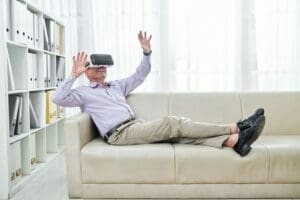 In clinical practice, VR is not used as a treatment on its own. Instead, it may be incorporated into therapy as a tool to support specific interventions when appropriate. The purpose is to help individuals engage with situations, sensations, or scenarios that may be difficult to access, control, or reproduce in real life.
VR can be particularly useful when gradual, controlled exposure or environmental simulation is beneficial to the therapeutic process. However, its use is always determined by clinical judgment and the patient’s individual needs.
VR is one of several tools that may be considered as part of a broader, individualized treatment plan.
Virtual Reality Therapy is not used as a primary or standalone treatment for these conditions. Instead, it may be incorporated selectively within a broader, evidence-based treatment plan when clinically appropriate.
Research supports the use of VR-based interventions across a range of clinical areas. However, in practice, its use depends on the individual’s symptoms, treatment goals, and tolerance. Not all patients benefit from VR, and alternative approaches are used when it is not indicated.
The versatility of VR therapy makes it an excellent tool for addressing a wide range of mental health concerns:
- Anxiety Disorders and Phobias:
- Social anxiety

- Agoraphobia
- Claustrophobia
- Fear of flying
- Fear of public speaking
- Driving phobia
- Social anxiety
- Post-Traumatic Stress Disorder (PTSD):
- Combat-related PTSD
- Trauma from natural disasters or accidents
- Depression:
- Skills training for managing depression
- Addressing teenage depression
- Skills training for managing
- Mindfulness and Relaxation:
- Mindfulness skills training
- Meditation practice
- Relaxation techniques before, during, and after medical procedures
- Attention and Focus:
- Attention skills training
- Practicing focus without distractions
- Attention skills training
- General Well-being:
- Enhancing the overall sense of well-being
- Stress reduction

 depression
The presence of a condition on this list does not mean Virtual Reality Therapy will be used. Treatment decisions are based on a comprehensive clinical evaluation and what is most appropriate for the individual.
When Virtual Reality Therapy is incorporated into treatment, it is introduced gradually and within a structured clinical framework. The process is guided and adjusted based on the individual’s response.
 Sessions involving VR typically begin with preparation, including discussion of goals, expectations, and any potential concerns. The virtual environments are then introduced in a controlled, measured way, allowing the individual to engage at a manageable pace.
During this process, therapeutic techniques such as cognitive restructuring, breathing strategies, or other evidence-based methods are applied alongside the VR experience. The focus is not on the technology itself, but on how the individual responds and learns to manage their reactions.
At all times, the level of exposure and intensity is adjusted based on tolerance. If VR is not helpful or well-tolerated, it is discontinued, and alternative approaches are used instead.
Dr. Ginny Estupinian PhD, offers a state-of-the-art Virtual Reality Therapy program designed to provide the most effective and comfortable experience for her clients.
Immersive Environments
Dr. Estupinian’s VR therapy sessions offer a diverse range of authentic virtual environments where clients can:
- Interact with virtual people and places
- Face their fears in a controlled setting
- Practice conversations and social interactions
- Visit remote or inaccessible locations
- Relax in tranquil, calming settings
 Interact with virtual people and places
These immersive environments are highly customizable. These environments can be adjusted and customized in real time based on the individual’s clinical needs. For example:
- Driving-related exposure scenarios: Clients can experience driving on various road types, including bridges and highways, under different weather conditions.
- Public speaking simulation scenarios: Clients can practice giving presentations in front of virtual audiences, with Dr. Estupinian controlling factors such as audience size, receptiveness, and even clothing.
- Agoraphobia-related exposure environments: Clients can gradually expose themselves to crowded places, public transit, open spaces, and other challenging environments.
Cutting-Edge Equipment
Dr. Estupinian utilizes the latest medical-grade wireless VR systems to ensure your therapy sessions are:
- Comfortable
- Safe
- Private
- Highly effective
During a VR therapy session, you’ll work closely with Dr. Estupinian to:
- Identify specific fears or anxiety triggers
- Develop a personalized treatment plan
- Gradually expose yourself to anxiety-inducing scenarios in the virtual environment
- Learn and practice coping strategies in real-time
- Process your experiences and track your progress
 Identify specific fears or anxiety triggers
Dr. Estupinian will have complete control over the virtual environment, allowing her to:
- Adjust the intensity of exposures
- Introduce or remove specific elements
- Repeat scenarios as needed
- Ensure the pacing matches your individual needs and comfort level
For example, if you’re working on overcoming a fear of flying but aren’t ready to experience turbulence, Dr. Estupinian can guarantee a smooth virtual flight. As you progress, she can gradually introduce more challenging elements to build your confidence and resilience.