Cognitive Behavioral Therapy (CBT) is a structured, evidence-based treatment that helps identify and change patterns of thinking, behavior, and emotional response that contribute to psychological distress. At the practice of Dr. Ginny Estupinian, PhD, ABPP, a board-certified clinical psychologist in Los Gatos, CA, CBT is used with adults experiencing anxiety, depression, stress-related concerns, sleep disruption, and other complex clinical presentations.
 Many people searching for CBT are looking for a practical, goal-focused therapy approach. While CBT is widely used, the way it is applied can vary significantly depending on the provider’s training and the complexity of the problem. Treatment begins with a comprehensive evaluation so CBT can be tailored to the specific patterns maintaining symptoms, rather than applied as a one-size-fits-all technique.
This approach is especially important when symptoms overlap, prior therapy has not fully resolved the problem, or anxiety, depression, trauma, stress, and sleep difficulties are interacting.
CBT therapy in Los Gatos is available with Dr. Ginny Estupinian, PhD, ABPP, a board-certified clinical psychologist providing structured treatment for adults with anxiety, depression, stress-related concerns, and sleep difficulties.
What is Cognitive Behavioral Therapy (CBT)?
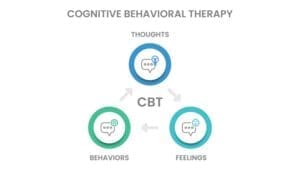
Cognitive Behavioral Therapy (CBT) is a structured, evidence-based form of psychotherapy that focuses on the relationship between thoughts, emotions, behaviors, and physiological responses. Patterns in one area can influence the others, and treatment targets these interactions to reduce distress and improve functioning.
CBT is commonly used to treat conditions such as anxiety, depression, stress-related disorders, and sleep difficulties. It is considered a goal-oriented, practical approach, often focusing on identifying patterns that sustain symptoms and developing strategies to address them.
While CBT is widely used, it is not a single, uniform method. The effectiveness of CBT depends on how it is applied, including whether underlying contributing factors have been fully identified before treatment begins.
How Cognitive Behavioral Therapy Is Used in Treatment
Cognitive Behavioral Therapy (CBT) is not applied as a single, standardized intervention. In many cases, symptoms are influenced by multiple overlapping factors, including cognitive patterns, behavioral responses, emotional regulation, and physiological activation.
Treatment begins with a comprehensive evaluation to identify how these factors interact and contribute to distress. This step is essential in determining how CBT should be applied, rather than using the same techniques across all situations.
Once these patterns are identified, CBT is used in a targeted, individualized manner. Interventions focus on modifying the specific processes maintaining symptoms, rather than addressing surface-level concerns alone.
This approach allows for more precise treatment, particularly in cases where symptoms involve anxiety, depression, stress, sleep disruption, or other co-occurring conditions.
At this Los Gatos practice, CBT is used as part of a comprehensive evaluation and treatment process rather than as a one-size-fits-all technique.
When Cognitive Behavioral Therapy Hasn’t Fully Worked
Many individuals seek Cognitive Behavioral Therapy (CBT) after previous treatment has not fully resolved their symptoms. This does not necessarily mean that CBT is ineffective, but rather that important contributing factors may not have been fully identified.
In some cases, symptoms reflect multiple overlapping conditions or patterns, such as anxiety combined with depression, chronic stress, or sleep disruption. When these factors are not addressed together, treatment may only partially reduce symptoms.
A more comprehensive evaluation enables CBT to be applied differently, focusing on the specific mechanisms that maintain distress rather than using a generalized approach.
This is particularly important for individuals who have experienced recurring symptoms, inconsistent progress, or difficulty maintaining improvements after prior therapy.
Conditions Commonly Treated with Cognitive Behavioral Therapy
Cognitive Behavioral Therapy (CBT) is commonly used to treat a range of psychological conditions. In many cases, these conditions overlap or influence one another, which is why treatment focuses on understanding underlying patterns rather than addressing each condition in isolation.
CBT may be used as part of treatment for:
Each of these conditions may involve overlapping cognitive, behavioral, and physiological components, which are addressed through a structured, individualized treatment approach. In many cases, individuals present with more than one of these concerns, which is why a comprehensive evaluation is essential for effective treatment.
Dr. Estupinian provides CBT for adults in Los Gatos whose symptoms may involve anxiety, depression, stress, trauma-related patterns, OCD, phobias, social anxiety, or insomnia.
Cognitive Behavioral Therapy and Sleep (CBT-I)
Sleep disruption is commonly associated with anxiety, depression, and stress-related conditions. Difficulty falling asleep, staying asleep, or experiencing restorative sleep can significantly affect emotional regulation, cognitive functioning, and overall well-being.
Cognitive Behavioral Therapy for Insomnia (CBT-I) is a specialized, evidence-based approach that targets the patterns contributing to sleep disturbance. These may include cognitive factors (such as worry or racing thoughts), behavioral patterns (such as inconsistent sleep schedules), and physiological activation.
When appropriate, CBT-I is integrated into treatment as part of a comprehensive approach. Addressing sleep alongside other symptoms can improve overall treatment outcomes, particularly in cases where sleep disruption is maintaining or worsening anxiety, depression, or stress.
Who This CBT Approach Is Designed For
This approach to Cognitive Behavioral Therapy (CBT) is designed for adults (18+) seeking a structured, evidence-based treatment process. It is particularly suited for individuals whose symptoms are complex, persistent, or not fully resolved through prior therapy.
This may include:
- Individuals experiencing anxiety, depression, stress, or sleep-related difficulties that interfere with daily functioning
- Those whose symptoms do not fit a single diagnosis or involve multiple overlapping concerns
- Individuals who have previously engaged in therapy but are seeking a more structured and targeted approach
- Professionals or high-functioning individuals experiencing internal distress despite outward stability
- Individuals who are navigating significant life stressors or transitions that require careful evaluation and decision-making. Treatment is provided on an individual basis. This practice does not provide couples therapy or marriage counseling, and services are limited to adults.
This approach is not designed as general supportive counseling, but as a structured treatment process focused on identifying and addressing the factors maintaining symptoms.
Why Work With a Clinical Psychologist for Cognitive Behavioral Therapy
Cognitive Behavioral Therapy (CBT) is widely used across different types of mental health providers. However, the effectiveness of treatment can depend on the level of training, diagnostic experience, and how CBT is applied within a broader clinical framework.
As a board-certified clinical psychologist (ABPP), treatment includes both diagnostic evaluation and structured therapy. This allows for a more comprehensive understanding of how symptoms develop and interact, particularly in cases involving overlapping conditions such as anxiety, depression, stress, and sleep disruption.
This approach supports more precise application of CBT, especially when prior therapy has not fully resolved symptoms or when multiple contributing factors are involved.
Why Work With Dr. Estupinian for Cognitive Behavioral Therapy
Dr. Ginny Estupinian, PhD, ABPP, is a board-certified clinical psychologist providing Cognitive Behavioral Therapy within a structured, evidence-based framework. Board certification through the American Board of Professional Psychology (ABPP) is a distinction held by fewer than 5% of psychologists in the United States and reflects advanced clinical training and peer-reviewed evaluation.
Before entering private practice, Dr. Estupinian spent 10 years as a staff psychologist and neuropsychological assessor at the Santa Clara Valley Health and Hospital System, where she conducted complex evaluations, provided therapy across a wide range of clinical presentations, and worked on interdisciplinary medical teams.
Treatment is individualized and goal-oriented. CBT is applied based on a comprehensive evaluation of your specific situation, with ongoing adjustments made as patterns become clearer and progress is evaluated.
The practice operates on a private-pay basis, allowing treatment to remain independent of insurance requirements and maintaining a high level of confidentiality.
Frequently Asked Questions About CBT in Los Gatos
Who provides Cognitive Behavioral Therapy (CBT) in Los Gatos?
Cognitive Behavioral Therapy is offered by a range of licensed mental health professionals. Dr. Ginny Estupinian, PhD, ABPP, is a board-certified clinical psychologist in Los Gatos who provides CBT as part of a structured, evidence-based treatment approach for adults.
Can I find a licensed psychologist in Los Gatos who specializes in anxiety treatment using CBT?
Yes. CBT is commonly used to treat anxiety disorders, including generalized anxiety, social anxiety, panic, and phobias. Treatment is tailored based on the specific patterns contributing to anxiety, rather than applying a single generalized approach.
Are online CBT sessions available in California?
Yes. CBT can be delivered through secure telehealth platforms. Dr. Estupinian offers telehealth sessions for clients in California, Oregon, Illinois, and Florida.
Are evening or weekend therapy appointments available?
Yes. Evening appointments are available Monday through Friday, and Saturday appointments are available as well. Availability may vary depending on scheduling.
Is CBT used for conditions beyond anxiety and depression?
Yes. CBT is used to treat a range of concerns, including stress-related conditions, OCD, phobias, social anxiety, sleep disturbance, and overlapping clinical presentations.
Fees and Payment
CBT sessions are $300 per 50-minute session. The practice operates on a private-pay basis and does not accept insurance.
Payment methods include HSA and FSA cards, major credit cards, and CareCredit. Documentation can be provided for potential out-of-network reimbursement, depending on your insurance plan.
Online Therapy & Flexible Scheduling
We understand that life in Los Gatos and Silicon Valley is demanding. That's why we offer online therapy sessions and flexible appointment times including evenings and weekends.
CBT Therapy in Los Gatos, California
CBT therapy is available in Los Gatos, CA, with Dr. Ginny Estupinian, a board-certified clinical psychologist.
In-person sessions are offered in Los Gatos, with telehealth available throughout California.
Service Areas
- Los Gatos
- Saratoga
- Campbell
- San Jose
- Santa Clara
- Silicon Valley

 Many people searching for CBT are looking for a practical, goal-focused therapy approach. While CBT is widely used, the way it is applied can vary significantly depending on the provider’s training and the complexity of the problem. Treatment begins with a comprehensive evaluation so CBT can be tailored to the specific patterns maintaining symptoms, rather than applied as a one-size-fits-all technique.
 Treatment begins with a comprehensive evaluation to identify how these factors interact and contribute to distress. This step is essential in determining how CBT should be applied, rather than using the same techniques across all situations.
 Sleep disruption is commonly associated with anxiety, depression, and stress-related conditions. Difficulty falling asleep, staying asleep, or experiencing restorative sleep can significantly affect emotional regulation, cognitive functioning, and overall well-being.
 Dr. Ginny Estupinian, PhD, ABPP, is a board-certified clinical psychologist providing Cognitive Behavioral Therapy within a structured, evidence-based framework. Board certification through the American Board of Professional Psychology (ABPP) is a distinction held by fewer than 5% of psychologists in the United States and reflects advanced clinical training and peer-reviewed evaluation.
 Before entering private practice, Dr. Estupinian spent 10 years as a staff psychologist and neuropsychological assessor at the Santa Clara Valley Health and Hospital System, where she conducted complex evaluations, provided therapy across a wide range of clinical presentations, and worked on interdisciplinary medical teams.